
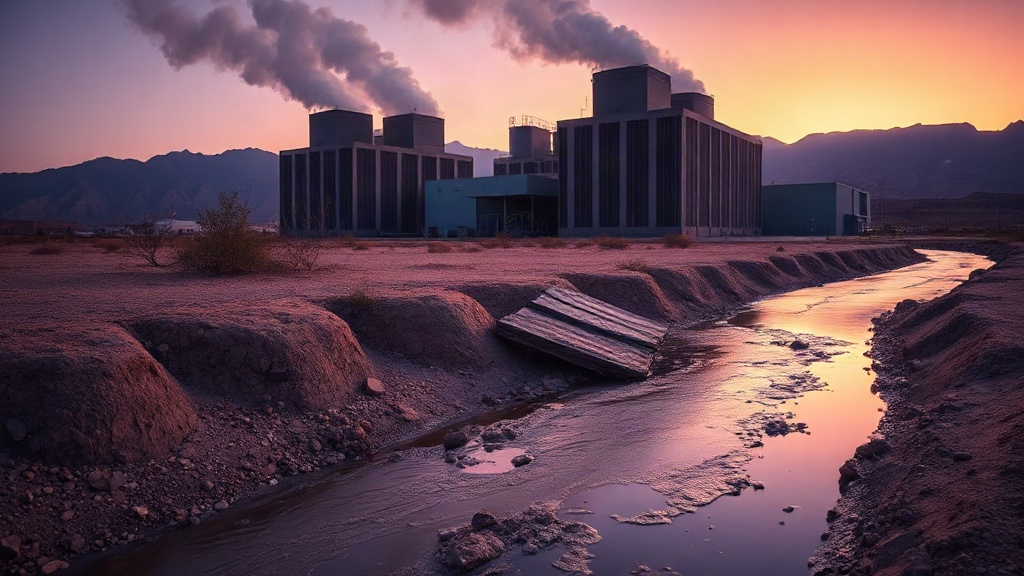
When a routine water test at a massive data center construction site in Wyoming turned up a rare bacterium, it was more than just a regulatory hiccup. It was a signal that the booming data center industry may be leaving a troubling mark on America's water systems. Across the country, communities are pushing back against facilities that consume enormous volumes of water and discharge waste that can carry everything from industrial chemicals to biological contaminants.
The incident in Cheyenne involved 801,000 gallons of water flushed into the sewer system by a contractor for a major technology company. While that water was not destined for public drinking supplies, the discovery of Cupriavidus gilardii, a bacterium that can pose risks to people with weakened immune systems, underscored how little oversight exists over what data centers release into the environment.
Data centers are the backbone of the digital economy, housing the servers that power everything from streaming services to artificial intelligence. But their environmental footprint extends far beyond electricity consumption. These facilities require massive amounts of water for cooling, and that water often picks up contaminants before being discharged into municipal systems or local waterways.
Why Data Centers Use So Much Water
Most people don't realize that a single large data center can use millions of gallons of water every day. The primary use is for cooling: servers generate immense heat, and water-based cooling systems are often the most efficient way to keep them running. Some facilities use evaporative cooling, which consumes water directly, while others use chilled water loops that still require regular replenishment.
In arid regions like Arizona, Nevada, and parts of Texas, data centers have faced criticism for competing with households and farms for scarce water supplies. But the wastewater issue is different. Even in areas with adequate water, the quality of what leaves a data center can be a serious concern.
What's Actually in the Wastewater?
The Cheyenne case is not isolated. Across the US, regulators and environmental groups have documented a range of pollutants in data center discharge. Some of the most common include:
- Biocides and anti-scaling agents used to prevent microbial growth and mineral buildup in cooling systems.
- Corrosion inhibitors that can contain heavy metals like zinc or copper.
- Per- and polyfluoroalkyl substances (PFAS), often called "forever chemicals," which have been linked to serious health problems and are extremely persistent in the environment.
- High salinity and total dissolved solids that can harm aquatic life and degrade water quality for downstream users.
These substances don't just disappear. When discharged into a sewer system, they can overwhelm municipal treatment plants that are not designed to remove them. The result is that some contaminants end up in rivers, lakes, and even groundwater, affecting ecosystems and potentially human health.
Communities Push Back
Public awareness of data center water impacts has grown rapidly. In several states, residents and local officials have begun demanding more transparency and stricter permits. Some communities have successfully delayed or blocked new data center projects over water concerns.
In Virginia, which has the largest concentration of data centers in the world, residents have raised alarms about the cumulative impact on local watersheds. In Oregon and Washington, where cheap hydropower has attracted many facilities, environmental groups have filed complaints about thermal pollution and chemical discharges.
The backlash is not just about pollution. It's also about accountability. Many data centers operate under general industrial permits that were written decades ago for traditional manufacturing. Those permits often do not require monitoring for the specific chemicals used in modern cooling systems. As a result, the public often learns about problems only after a violation occurs.
The Regulatory Gap
One of the biggest challenges is that federal and state regulations have not kept pace with the rapid growth of the data center industry. The Clean Water Act requires permits for discharges into surface waters, but many data centers discharge into public sewers, where oversight falls to local utilities. Those utilities may not have the expertise or resources to test for the full range of contaminants.
In some cases, data centers have been accused of exploiting loopholes. For example, a facility might discharge wastewater as "stormwater" or "non-contact cooling water" to avoid stricter requirements. Environmental advocates argue that this is a form of regulatory arbitrage that puts communities at risk.
What Can Be Done?
Experts say the solution involves a combination of better technology, stronger regulation, and greater transparency. On the technology side, many data centers are moving toward closed-loop cooling systems that recycle water and drastically reduce discharge. Some are using alternative cooling methods, such as air-side economizers or liquid immersion cooling, that require little or no water.
On the regulatory side, states like California and New York are beginning to update their permits to address data center-specific pollutants. The EPA has also signaled interest in developing national guidelines for the sector. However, progress is slow, and industry lobbying has often delayed stricter rules.
Transparency is another critical piece. Some companies now publish water usage and quality data voluntarily, but there is no consistent standard. Advocates are calling for mandatory reporting that includes detailed chemical analyses of wastewater discharges.
The Bigger Picture
The wastewater issue is part of a larger conversation about the environmental costs of the digital age. Data centers are essential infrastructure, but they cannot be allowed to operate without regard for the communities that host them. The Wyoming incident may have been a wake-up call, but it is far from the only one.
As artificial intelligence and cloud computing continue to expand, the demand for data centers will only grow. That makes it all the more urgent to address water pollution now, before it becomes an even bigger problem. The good news is that many solutions already exist. What's needed is the political will and public pressure to implement them.
Frequently Asked Questions
What kind of contaminants are found in data center wastewater?
Data center wastewater can contain biocides, corrosion inhibitors, heavy metals, high salinity, and sometimes PFAS or other industrial chemicals. The exact composition depends on the cooling system and water treatment methods used.
Is data center wastewater dangerous to human health?
In most cases, the wastewater is diluted and treated before reaching drinking water sources, so direct health risks are low. However, certain contaminants like PFAS can persist and accumulate in the environment, potentially affecting water supplies over time.
Why are data centers allowed to discharge polluted water?
Many data centers operate under permits that were not designed for their specific waste streams. Regulatory gaps and outdated rules mean that some pollutants are not monitored or limited, allowing discharges that would not be permitted for other industries.
Can data centers operate without water pollution?
Yes. Technologies such as closed-loop cooling, air-cooled systems, and advanced water treatment can significantly reduce or eliminate harmful discharges. Many new facilities are adopting these approaches, but older ones may require costly retrofits.
How can communities influence data center water practices?
Communities can advocate for stricter local permits, demand transparent reporting, and participate in public comment periods for new projects. Engaging with local utilities and environmental agencies can also help ensure that data centers are held accountable for their water impacts.