
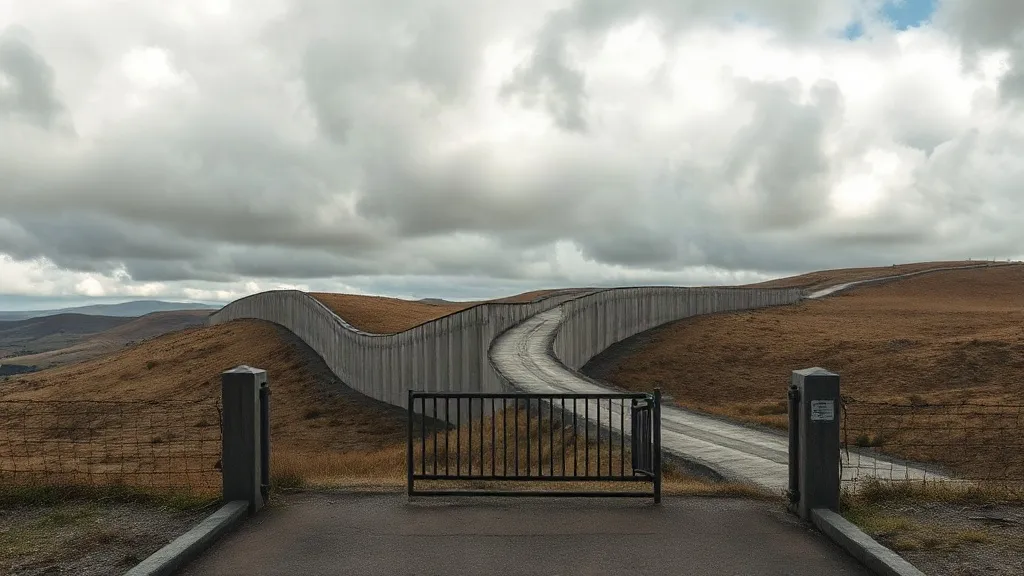
In the wake of a deadly attack, Israel has directed its military to prepare for a full closure of the West Bank. The order, announced on [date], signals a significant escalation in restrictions on Palestinian movement and comes amid already heightened tensions. While details of the attack remain under investigation, the decision to seal off the territory entirely is a measure that carries profound humanitarian, economic, and political implications. For observers of the region, this development raises urgent questions about the future of Palestinian daily life, the stability of the Palestinian Authority, and the prospects for any diplomatic breakthrough.
What the Closure Order Entails
A full closure of the West Bank would mean that all entry and exit points into and out of the territory are sealed. This includes checkpoints between the West Bank and Israel, as well as crossings to Jordan. In practice, such a closure would prevent the vast majority of Palestinians from leaving the West Bank, whether for work, medical treatment, or family visits. It would also halt the movement of goods, potentially crippling an already fragile economy. The Israeli military has been instructed to prepare for this scenario, though the exact timeline and scope remain unclear. Past closures have been partial and temporary, but a full closure would be unprecedented in recent years.
Checkpoints and Movement Restrictions
Checkpoints are a familiar feature of life in the West Bank, but a full closure would render them effectively permanent barriers. Palestinians with permits to work in Israel or to access hospitals in East Jerusalem would find those permits void. The psychological toll of such isolation is immense, as families would be cut off from essential services and livelihoods. The military's preparation could involve deploying additional troops to enforce the closure, further militarizing the landscape.
The Attack That Sparked the Decision
The attack that prompted this order is still being investigated, but it has clearly shaken Israeli security establishments. Without official confirmation of the perpetrators or the exact circumstances, it is difficult to assess whether the closure is a proportionate response. However, the swift and severe nature of the directive suggests that the government views the attack as a significant threat that warrants extraordinary measures. In the past, attacks have led to targeted closures of specific towns or villages, but a territory-wide closure is a rare and drastic step.
Humanitarian and Economic Consequences
The humanitarian impact of a full closure would be severe. The West Bank relies heavily on imports for food, medicine, and fuel. A complete seal would disrupt supply chains, leading to shortages and price hikes. Hospitals, already strained by the COVID-19 pandemic and chronic underfunding, could face critical shortages of medical supplies. Moreover, tens of thousands of Palestinians work in Israel or in Israeli settlements; a closure would cut off their income, pushing many families deeper into poverty. The economic fallout would not be confined to the West Bank; Israeli businesses that rely on Palestinian labor and trade would also suffer.
Impact on Daily Life
For ordinary Palestinians, a full closure means losing the ability to visit relatives, attend school or university, or access specialized medical care. Students who study abroad would be unable to return to their campuses. Farmers would be unable to reach their lands beyond the separation barrier. The closure would also affect the movement of humanitarian aid workers and journalists, making it harder for the outside world to monitor conditions on the ground.
Political Ramifications
The Palestinian Authority (PA), which governs parts of the West Bank, has already condemned the move, calling it a collective punishment. The PA's already dwindling legitimacy could be further eroded if it is seen as unable to protect its people. Meanwhile, Hamas and other militant groups may exploit the situation to rally support, arguing that only armed resistance can counter Israeli measures. On the Israeli side, the closure could deepen the rift between those who advocate for harsh security measures and those who warn that such actions only breed more extremism. The international community, including the United States and the European Union, has expressed concern, urging Israel to avoid steps that could escalate tensions.
Security Implications
From a security perspective, the closure is intended to prevent further attacks by restricting the movement of potential perpetrators. However, critics argue that collective punishment often backfires, fueling resentment and recruitment for militant groups. The closure could also hamper the Israeli military's own intelligence-gathering efforts, as it relies on Palestinian informants and cooperation that may be undermined by the harsh measures. Moreover, a prolonged closure could destabilize the West Bank, leading to unrest and confrontations that would require even more military resources to contain.
Historical Context
This is not the first time Israel has imposed closures on the West Bank. During the Second Intifada in the early 2000s, severe restrictions were commonplace, including curfews and closures that lasted for weeks. Those measures were later eased, but the checkpoint system and permit regime remain. A full closure would represent a return to the darkest days of that period, and possibly worse, given the current political climate. The move also comes at a time when the peace process is moribund, and trust between the two sides is at a nadir.
International Reactions
Early responses from world capitals have been cautious but concerned. The United Nations has warned of the humanitarian impact, while human rights organizations have labeled the move as a form of collective punishment, which is prohibited under international law. The Israeli government maintains that security measures are necessary to protect its citizens, and that the closure is a temporary response to a specific threat. However, the breadth of the order has raised eyebrows even among Israel's allies, who fear it could ignite a wider conflagration.
What to Watch For
Several factors will determine how this situation unfolds. First, the duration of the closure: if it is short-lived, the impact may be mitigated; if it drags on, the consequences will be severe. Second, the response of the Palestinian leadership and whether they can maintain calm. Third, the role of the international community in mediating or pressuring Israel to lift the closure. Finally, the security situation on the ground: any further attacks could lead to even harsher measures, while relative calm might prompt a relaxation.
Frequently Asked Questions
What exactly does a full closure of the West Bank mean?
A full closure means that all entry and exit points to the West Bank are sealed, preventing the movement of people and goods in and out of the territory. This includes checkpoints with Israel and international crossings.
Why did Israel order this closure?
The order follows a deadly attack. Israeli authorities believe that closing off the West Bank will prevent further attacks by restricting the movement of potential assailants and disrupting militant networks.
How long will the closure last?
The duration is uncertain. It could be temporary, lasting days or weeks, or it could be extended indefinitely depending on security assessments and political considerations.
What impact will this have on Palestinians?
The closure will severely restrict Palestinians' freedom of movement, affecting access to work, healthcare, education, and family life. It will also worsen economic hardship and could lead to shortages of essential goods.
Is this closure legal under international law?
International law prohibits collective punishment. Critics argue that a full closure amounts to collective punishment of the entire Palestinian population for the actions of a few. Israel maintains that the measure is a necessary security precaution.