
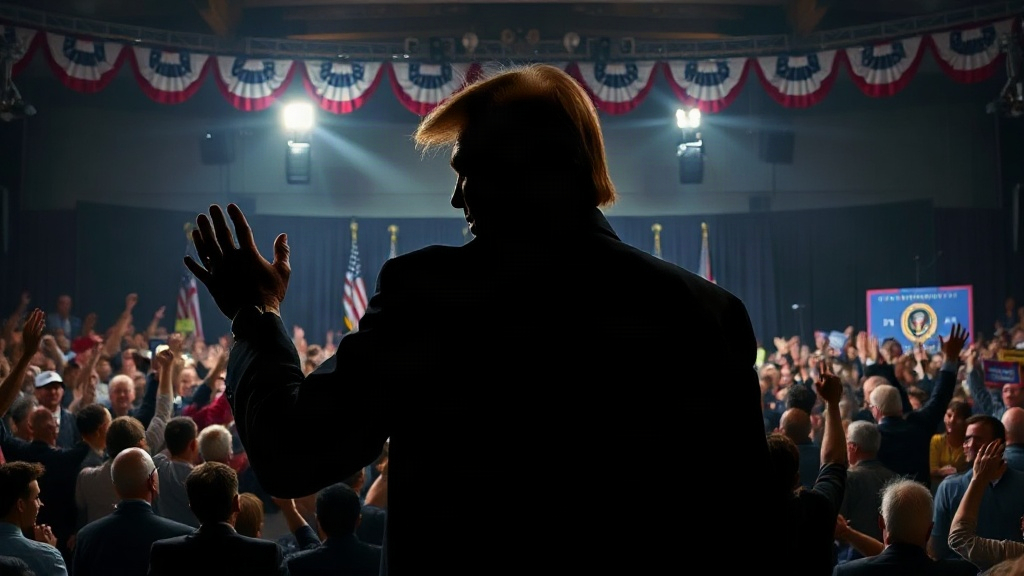
It was supposed to be a unifying moment, a show of party loyalty and electoral enthusiasm. But when Donald Trump took the stage at the Republican National Convention and began leading a pledge, things veered sharply off script. In a moment that instantly went viral, Trump told attendees to vote even if they weren't registered and to 'cheat like hell.' The crowd, a mix of delegates, donors, and die-hard supporters, reacted with a combination of laughter, applause, and visible confusion. The bizarre exchange has since become a lightning rod for critics and a rallying cry for his base, raising fresh questions about election integrity, rhetoric, and what exactly Trump meant.
For anyone who has followed Trump's political career, the 'cheat like hell' comment is both shocking and strangely familiar. It fits a pattern of baseless accusations about voter fraud and a willingness to bend norms in pursuit of victory. But coming from the party that has made election security its central talking point since 2020, the hypocrisy was hard to miss. Democrats pounced immediately, while some Republicans scrambled to spin the remark as a joke. Yet the damage, or perhaps the intended effect, was already done. The moment encapsulated the chaotic, norm-busting style that has defined Trump's grip on the GOP.
What Exactly Happened at the Convention?
The incident occurred during a segment meant to energize the base ahead of the November election. Trump, known for his off-the-cuff style, began a call-and-response pledge with the audience. 'Raise your right hand,' he instructed. 'Do you swear to vote for Donald J. Trump?' The crowd roared its approval. Then Trump added a twist: 'And if you're not registered, get registered. And if you can't get registered, vote anyway. And if they catch you, cheat like hell.' The line was met with a mix of cheers and nervous laughter, and several attendees later described feeling unsettled by the explicit call to break the law.
Video of the moment spread rapidly on social media, with clips amassing millions of views within hours. Hashtags like #CheatLikeHell and #TrumpPledge trended on multiple platforms. News outlets across the political spectrum led with the story, and late-night hosts had a field day. But beyond the memes and outrage, the incident raised serious questions about the state of American democracy and the rhetoric coming from one of its two major parties.
Why the 'Cheat Like Hell' Comment Matters
At first glance, the comment might be dismissed as Trump being Trump—another provocative quip from a man who thrives on controversy. But the context makes it far more consequential. For nearly four years, Trump and his allies have pushed the false narrative that the 2020 election was stolen. This rhetoric has fueled a wave of restrictive voting laws, threats against election workers, and a deep erosion of public trust in the electoral process. When the de facto leader of the Republican Party jokes about cheating, it legitimizes the very behavior his supporters claim to oppose.
Election experts warn that such rhetoric can have real-world consequences. 'When a major party leader tells people to cheat, it undermines the rule of law and encourages exactly the kind of behavior that leads to contested elections,' said one political scientist who requested anonymity to speak candidly. 'Even if it's a joke, the message is dangerous.' The comment also provides ammunition to authoritarian leaders abroad who point to American hypocrisy on democratic norms.
Furthermore, the pledge moment highlighted a deeper tension within the GOP. While some party officials have tried to distance themselves from Trump's most extreme statements, the convention's embrace of his rhetoric shows who really controls the party. The 'cheat like hell' line was not a gaffe; it was a feature of the Trump experience, and the crowd's reaction suggests it resonated with a significant portion of the base.
Reactions From Across the Political Spectrum
Democrats were quick to seize on the comment. The Biden campaign released a statement calling it 'a direct assault on the integrity of our elections' and urged voters to reject candidates who 'joke about breaking the law to win.' Several Democratic lawmakers took to social media to express outrage, with some calling for Trump to be barred from future conventions. 'This is not normal,' wrote one senator. 'This is what authoritarianism looks like.'
Republicans, meanwhile, offered a range of responses. Some dismissed the comment as a harmless joke taken out of context. 'He was clearly being sarcastic,' said one GOP strategist. 'The left has no sense of humor.' Others, however, expressed discomfort privately, worried that the comment could alienate swing voters who are already concerned about election integrity. A few prominent conservatives publicly criticized Trump, though they were quickly attacked by his loyalists.
The media reaction was equally divided. Conservative outlets largely downplayed the story or framed it as another example of Trump triggering the libs. Mainstream and left-leaning outlets treated it as a major news event, with extensive analysis of the implications. The stark difference in coverage underscored the deep polarization that defines American politics today.
The Bigger Picture: Election Integrity and 2024
The 'cheat like hell' moment cannot be understood in isolation. It comes amid a broader battle over voting rights and election administration. Since 2020, Republican-controlled legislatures have passed dozens of laws making it harder to vote, often justified by the false claim of widespread fraud. At the same time, election officials have faced unprecedented threats and harassment. In this environment, Trump's words carry extra weight.
For voters, the incident raises a fundamental question: Can a candidate who jokes about cheating be trusted to respect the outcome of an election he loses? Trump's refusal to concede in 2020 and his continued efforts to cast doubt on the process suggest the answer is no. That is a dangerous precedent for a democracy, and it is one that many Americans, regardless of party, find deeply troubling.
Looking ahead to November, the stakes could not be higher. The election will be a referendum not just on policy but on the very norms that hold the system together. Trump's pledge moment may have been bizarre, but it was also a stark reminder of what is at risk. Whether it becomes a footnote or a turning point remains to be seen.
What Happens Next?
In the immediate aftermath, Trump's campaign did not issue a formal clarification, and Trump himself seemed to relish the controversy. At a subsequent rally, he repeated a version of the line, drawing cheers from the crowd. This suggests the comment was not a mistake but a deliberate strategy to energize his base and dominate the news cycle. For his supporters, it is another example of his willingness to say what others won't. For his critics, it is further proof of his unfitness for office.
Legal experts note that while the comment itself is not a crime, it could be used in ongoing litigation related to election interference. 'If there is evidence that people actually acted on this advice, it could become a legal issue,' said one attorney. 'But as a rhetorical matter, it's already done significant damage.' The incident may also prompt renewed calls for social media platforms to crack down on election misinformation, though enforcement remains inconsistent.
Ultimately, the 'cheat like hell' moment is a Rorschach test for American politics. Trump's supporters see a fighter who will do whatever it takes to win. His opponents see a threat to democracy. The truth likely lies somewhere in between, but the fact that such a moment occurred at a major party convention is itself a sign of how far the norms have shifted. In a healthy democracy, a candidate's call to cheat would be universally condemned. In today's America, it is just another Tuesday.
Frequently Asked Questions
Did Trump really tell people to cheat in the election?
Yes, during a pledge at the Republican National Convention, Trump told attendees to vote even if they were not registered and to 'cheat like hell' if caught. The comment was captured on video and widely reported.
What was the reaction from Republican leaders?
Reactions varied. Some dismissed the comment as a joke, while others privately expressed concern. A few public figures criticized it, but most prominent Republicans either defended Trump or remained silent.
Could Trump face legal consequences for the comment?
Legal experts say the comment alone is unlikely to result in charges, as it was not a direct instruction to commit a specific crime. However, it could be cited in ongoing cases related to election interference or used to argue intent in future litigation.
How did the Biden campaign respond?
The Biden campaign condemned the comment as an assault on election integrity and used it to highlight the contrast between the two candidates. They called on voters to reject candidates who joke about breaking the law.
Why is this moment considered significant?
It is significant because it comes from the leader of a major party and reinforces false narratives about election fraud. It also highlights the erosion of democratic norms and the normalization of anti-democratic rhetoric in American politics.