
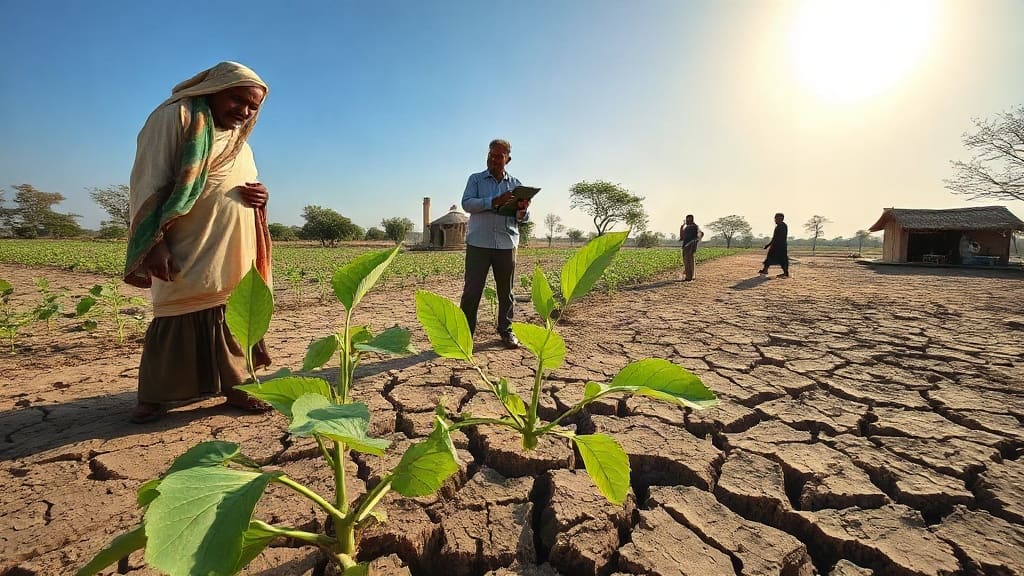
In a significant relief for farmers across Maharashtra, Deputy Chief Minister Devendra Fadnavis has announced that the government will conduct crop damage assessments at the mandal level and extend compensation to losses even in areas not officially declared drought-hit. The decision comes as 265 of the state's 358 talukas, roughly 74% of Maharashtra, have been marked as drought-affected. For farmers who have watched their crops wither under deficient rainfall, the promise of a more granular and inclusive assessment offers a glimmer of hope.
Why Mandal-Level Assessment Matters
Traditionally, drought declarations and subsequent compensation in Maharashtra have been based on taluka-level data. But talukas are large administrative units, and rainfall can vary dramatically within them. A mandal, which is a smaller revenue subdivision, often presents a more accurate picture of ground reality. By shifting the assessment to mandal level, the government aims to capture localized crop losses that might otherwise be overlooked.
Fadnavis emphasized that this approach will ensure financial assistance reaches those who need it most, without being hindered by broader taluka-level averages. For instance, a mandal that received significantly less rain than its neighboring mandal within the same taluka could now be evaluated separately. This granularity is expected to reduce instances where farmers in genuinely affected pockets are denied aid because the taluka as a whole did not meet drought criteria.
Covering Losses Outside the Drought List
Perhaps the more striking part of the announcement is the government's willingness to consider crop losses even in areas that are not on the official drought list. Historically, compensation was largely tied to a formal drought declaration. If a taluka was not declared drought-hit, farmers there had little recourse even if they suffered heavy crop damage due to erratic weather.
The new stance acknowledges that drought-like conditions can occur in pockets outside declared zones, and that farmers in those areas deserve support. According to Fadnavis, the assessment teams will evaluate crop damage irrespective of whether the area is on the drought list, and losses will be covered accordingly. This could set a precedent for how agricultural distress is addressed in the future, moving beyond rigid administrative boundaries to a more need-based approach.
How the Assessment Will Work
While the finer details are still being worked out, the process is expected to involve revenue and agriculture department officials conducting field surveys at the mandal level. They will assess the extent of damage to standing crops, which may include staples like soybean, cotton, sugarcane, and pulses. Farmers will need to report their losses through the local revenue machinery, and the data will be compiled to determine compensation amounts.
The government has indicated that financial assistance will be disbursed based on these assessments, though the exact quantum will depend on the severity of damage and the norms in place. Fadnavis stressed that the exercise will be transparent and time-bound, with an aim to expedite relief. For farmers already reeling under debt and input costs, the speed of assessment and payout will be as crucial as the amount itself.
Political and Economic Implications
Maharashtra is a major agricultural state, and farmer distress has long been a volatile political issue. With 265 talukas facing drought, the pressure on the government to act decisively is immense. The announcement by Fadnavis, who also holds the finance portfolio, signals a proactive approach to mitigate rural anger. It also comes ahead of a crucial electoral cycle, making it politically significant.
Economically, the drought threatens to reduce agricultural output, which could impact rural incomes and overall state GDP. By promising compensation, the government hopes to cushion the blow. However, the effectiveness will hinge on implementation. Previous compensation schemes have often been criticized for delays, inadequate amounts, and bureaucratic hurdles. The shift to mandal-level assessment is a step toward precision, but it also demands robust administrative capacity.
What Farmers Should Do
For farmers in affected areas, the immediate task is to ensure their losses are documented. Here are practical steps to take:
- Report promptly: Inform the local revenue officer (talathi) about crop damage as soon as possible. Delays can complicate verification.
- Keep evidence: Photographs of damaged crops, purchase receipts for seeds and fertilizers, and any other proof of investment can strengthen the claim.
- Coordinate with local groups: Farmer collectives and gram panchayats can help aggregate cases and push for timely surveys.
- Follow up: Keep track of the assessment process and follow up with officials to ensure your case is not missed.
Challenges Ahead
While the intent is commendable, the road to relief is fraught with challenges. Mandal-level assessment requires a large number of trained personnel and meticulous data collection. In remote areas, access can be difficult. Moreover, the criteria for determining compensation for losses outside the drought list need to be clearly defined to avoid ambiguity and disputes.
There is also the question of funding. The state's finances are stretched, and covering a wider pool of affected farmers will require additional resources. The government may need to seek central assistance or reallocate budgets. How it manages these constraints will determine the success of this initiative.
Conclusion
Fadnavis's announcement marks a shift toward a more nuanced and inclusive approach to drought relief in Maharashtra. By assessing damage at the mandal level and covering losses beyond the drought list, the government is acknowledging the complex reality of agricultural distress. If implemented well, it could bring relief to thousands of farmers who might otherwise fall through the cracks. The coming weeks will reveal whether the promise translates into timely and adequate support for those who feed the state.
Frequently Asked Questions
What is a mandal-level crop damage assessment?
It is a process where government officials evaluate crop losses at the mandal (a smaller revenue subdivision) level, rather than at the taluka level. This allows for more precise identification of affected areas.
Will farmers in areas not declared drought-hit get compensation?
Yes, according to the announcement, crop losses will be covered even in areas outside the official drought list, based on the assessment of damage.
How can farmers report crop damage?
Farmers should contact their local talathi or revenue officer and provide details of the damage, along with any evidence such as photographs and receipts.
When will the compensation be disbursed?
The timeline has not been specified, but the government has indicated that the assessment will be conducted promptly to ensure quick relief.
What crops are covered under this assessment?
All major crops affected by drought conditions, including soybean, cotton, sugarcane, and pulses, are expected to be covered.