
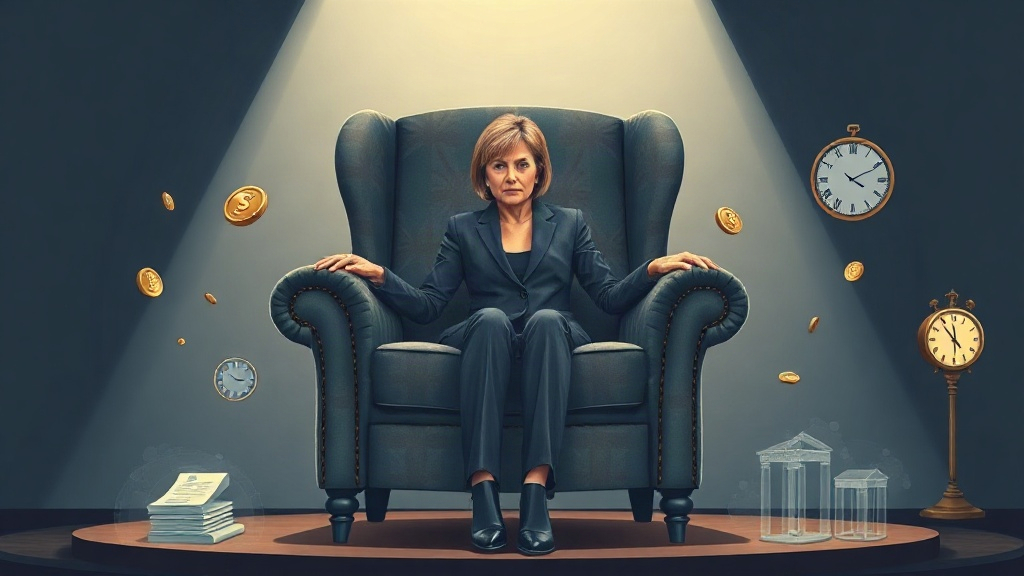
The Conservative Party is at a crossroads, and its latest leadership moves suggest it is choosing the path of least resistance. Kemi Badenoch, the party's leader, has unveiled her new shadow chancellor, and the appointment has sparked more concern than confidence among political observers. The decision underscores a deeper problem: the Tories are retreating into their comfort zone, recycling familiar fiscal arguments rather than confronting the reasons they were ejected from power. This article examines why Badenoch's economic plan is stuck in the past and what that means for the party's future and the country's economic debate.
When a party suffers a historic defeat, the natural instinct is to reassess and renew. But for the Conservatives, the temptation to double down on old orthodoxies is proving hard to resist. Badenoch's choice of a shadow chancellor reflects a preference for continuity over change, for safe messaging over bold thinking. It suggests that the party's leadership has not fully internalized the lessons of its electoral collapse. The result is a strategy that may energize the base but will struggle to win back the voters who abandoned the Tories in key seats.
The New Shadow Chancellor: A Signal of Intent
Badenoch's appointment of a new shadow chancellor was widely anticipated, and the name chosen sent a clear signal. The individual is known for advocating fiscal discipline, low taxes, and a smaller state. While these are core Conservative principles, they also represent the very platform that voters rejected at the last election. The party's failure to offer a fresh economic narrative is striking. Instead of grappling with the cost-of-living crisis, stagnant wages, and crumbling public services, the Tories seem to be betting that a return to austerity-lite messaging will resonate. That is a risky gamble.
The shadow chancellor's record suggests a deep skepticism of government intervention and a firm belief in market-led solutions. These are not inherently wrong positions, but they are insufficient to address the structural challenges facing the UK economy. The country needs investment in infrastructure, skills, and green technology. It needs a credible plan for regional inequality and productivity growth. Repeating slogans about fiscal responsibility without acknowledging the need for strategic public investment will not convince the electorate that the Tories have learned anything.
Why the Tories Lost: A Failure of Economic Trust
The Conservative defeat was not merely about personalities or scandals. It was fundamentally about economic trust. Voters felt that the party had lost control of the economy, from the disastrous mini-budget under Liz Truss to the austerity years under David Cameron and George Osborne. The party's brand was tarnished by a sense that it governed for the wealthy and powerful, not for ordinary families. Badenoch's apparent strategy of returning to the same fiscal playbook ignores this reality.
Moreover, the rise of Reform UK and the Green Party in the last election highlighted a fragmentation of the right and the growing appeal of alternative economic messages. Reform UK's populist tax-cutting rhetoric drew away some traditional Tory voters, while the Greens attracted those concerned about climate and social justice. Badenoch's move to shore up the party's right flank by emphasizing fiscal conservatism may stem the bleeding to Reform, but it risks alienating centrist voters who hold the keys to marginal constituencies.
The Comfort Zone: Familiar Rhetoric, Missing Vision
What exactly is the Tory comfort zone? It is a set of assumptions that have dominated Conservative economic thinking for decades: that tax cuts always stimulate growth, that government spending is inherently wasteful, and that deregulation is the answer to every problem. These beliefs are deeply held within the party, but they have been tested and found wanting. The UK's productivity crisis, its underfunded NHS, and its widening regional disparities all point to the limits of this worldview.
Badenoch's economic plan, as signaled by her shadow chancellor pick, appears to be a variation on this theme. There is talk of fiscal responsibility and cutting waste, but little in the way of a visionary program for economic renewal. The party seems more interested in opposing Labour's spending plans than in articulating its own positive agenda. This is a defensive posture, not a winning strategy. Voters want to know what the Tories would do differently, not just what they oppose.
The Risk of Misreading the Electorate
One of the most dangerous aspects of the current approach is the assumption that the public's primary concern is government debt. Poll after poll shows that voters are more worried about the cost of living, the state of the NHS, and the quality of local services. They are not clamoring for immediate tax cuts if those cuts mean further erosion of public services. The Tories' focus on fiscal discipline may be a misreading of the national mood, akin to fighting the last war.
Furthermore, the party's credibility on the economy is so damaged that simply repeating old mantras will not restore it. To win back trust, the Conservatives need to demonstrate genuine learning and a willingness to adapt. They need to acknowledge past mistakes, from the mini-budget to the failure to invest in public services. Badenoch's current trajectory suggests that such humility is in short supply.
A Path Forward: Beyond the Comfort Zone
If the Conservatives want to be a serious contender for government again, they must break free from their comfort zone. That means developing an economic platform that addresses the real anxieties of working families. It means being honest about the trade-offs involved in any fiscal policy. It means investing in the country's future, even if that requires higher taxes or borrowing in the short term. It means embracing a modern, inclusive capitalism that works for all regions, not just the City of London.
Badenoch has an opportunity to redefine the party's economic message. She could champion policies that combine fiscal responsibility with strategic investment. She could propose reforms to the tax system that make it fairer and more efficient. She could lead a national conversation about how to boost productivity and living standards. But none of this will happen if she remains wedded to the old orthodoxies. The comfort zone is a warm place, but it is also a trap.
Frequently Asked Questions
What is Kemi Badenoch's economic plan for the Conservative Party?
Kemi Badenoch's economic plan, as indicated by her choice of shadow chancellor, emphasizes fiscal discipline, low taxes, and a smaller state. However, critics argue that this approach fails to address the deeper structural issues facing the UK economy and ignores the reasons for the party's electoral defeat.
Why is the Conservative Party's economic strategy considered stuck in the past?
The Conservative Party's economic strategy is considered stuck in the past because it relies on longstanding orthodoxies such as tax cuts and deregulation, which have not delivered the promised growth or addressed public service decline. The party has not offered a fresh vision that responds to current challenges like the cost-of-living crisis and regional inequality.
How did the Conservative Party lose economic trust with voters?
The Conservative Party lost economic trust through a series of missteps, including the austerity policies of the 2010s, the chaotic mini-budget of 2022, and a perceived focus on the wealthy. Voters felt the party was out of touch with everyday economic struggles, leading to a loss of confidence in its management of the economy.
What are the risks of Kemi Badenoch's current economic approach?
The risks include alienating centrist voters, failing to win back those who defected to Reform UK or the Greens, and misreading public priorities. By focusing on fiscal discipline without a positive investment agenda, the party may appear out of touch and unable to offer solutions to the country's most pressing problems.
Can the Conservative Party recover economically under Badenoch's leadership?
Recovery is possible, but it requires a genuine break from past orthodoxies. Badenoch would need to present a credible plan that combines fiscal responsibility with strategic public investment, addresses regional disparities, and restores trust through honest acknowledgment of past failures. Without such a shift, the party's economic credibility will remain in doubt.