
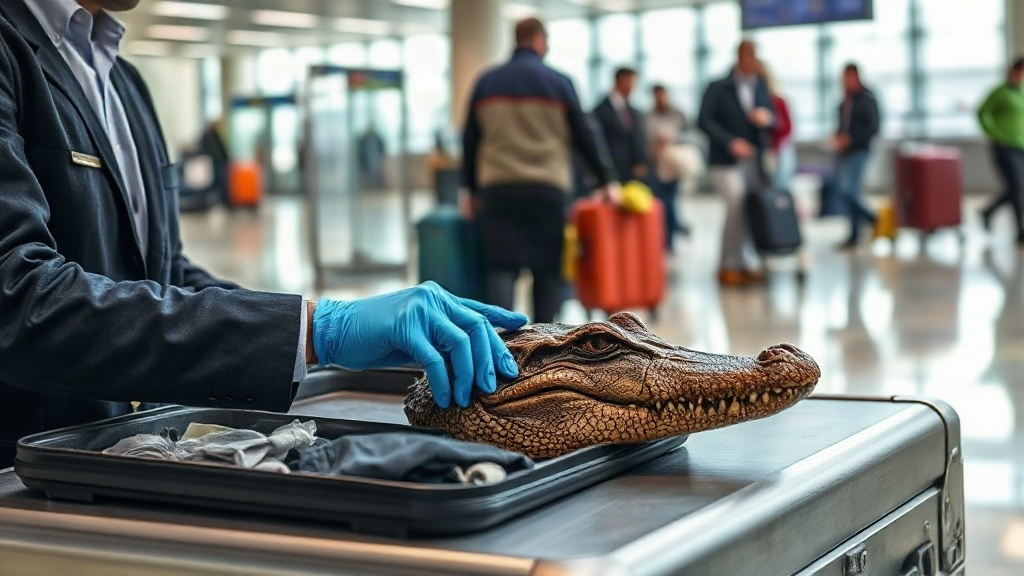
It began as a routine baggage check at Turin's Caselle airport, but what customs officers found inside one traveler's suitcase was anything but ordinary. Hidden among personal belongings was the dried head of a critically endangered crocodile, a grim trophy that now has the passenger facing serious legal trouble. The incident, which unfolded after a flight from Miami via Istanbul, shines a harsh light on the persistent trade in protected wildlife parts and the challenges authorities face in stopping it.
The discovery was made by Italy's financial police, the Guardia di Finanza, whose Turin unit confirmed the seizure in a statement. The passenger, an Italian man whose identity has not been released, had arrived on a long-haul route that took him from the United States through Turkey before landing in northern Italy. When officers inspected his luggage, they found the crocodile head in a dried state, suggesting it may have been prepared as a souvenir or for other purposes. The species involved, while not specified in initial reports, is believed to be from a critically endangered population, which elevates the severity of the offense.
How the Crocodile Head Was Detected at Turin Airport
Airport customs operations rely on a mix of technology, intelligence, and old-fashioned vigilance. In this case, the dried crocodile head was likely flagged during a manual inspection or through X-ray imaging that revealed an unusual organic shape. Turin's Caselle airport, while not as large as Rome's Fiumicino or Milan's Malpensa, has a dedicated customs unit trained to spot irregularities in luggage. The Guardia di Finanza often conducts random checks, but they also act on passenger profiling and route-based risk assessments. Miami and Istanbul are both known transit points for wildlife products, which may have raised a red flag.
Once the item was identified, officers would have consulted with wildlife experts or used CITES documentation to determine the species and its protection status. The dried condition of the head suggests it was not freshly killed but possibly processed for long-term preservation. This is a common tactic among smugglers who attempt to pass off animal parts as handicrafts or personal effects. The fact that it was hidden among regular luggage items indicates an intent to avoid detection, which strengthens the case for smuggling charges.
The Legal Consequences for Wildlife Smuggling in Italy
Under Italian law, trafficking in protected species is a criminal offense that can lead to significant fines and imprisonment. The passenger now faces an investigation for smuggling, a charge that carries penalties depending on the value of the item and the level of threat to the species. For critically endangered crocodiles, the sanctions are particularly severe because international treaties like CITES (the Convention on International Trade in Endangered Species) impose strict controls. Italy, as a signatory, enforces these rules through its customs and police forces.
Legal experts note that even possession of such an item without proper permits can result in fines ranging from thousands to tens of thousands of euros. In some cases, prison terms of up to two years are possible, especially if the court determines the smuggling was intentional and part of a larger operation. The man's travel route through multiple countries could also trigger international cooperation, as authorities in the United States and Turkey may be asked to provide information about how the crocodile head was obtained. For now, the item has been confiscated and will likely be used as evidence in any future trial.
Why Wildlife Trafficking Persists Through European Airports
This incident is not an isolated one. European airports have become key entry points for illegal wildlife products, driven by demand for exotic souvenirs, traditional medicines, and luxury goods. Crocodile parts, including heads, skins, and teeth, are particularly sought after in some markets. While the trade is heavily regulated, the high profit margins attract smugglers who are willing to take risks. Air travel offers a fast and relatively anonymous way to move items across continents, and the sheer volume of passengers makes it impossible to inspect every bag.
Customs agencies across Europe have stepped up their efforts in recent years, using advanced scanning technology and training officers to recognize protected species. However, smugglers constantly adapt their methods, concealing items in creative ways or mislabeling them as common objects. The role of transit hubs like Istanbul is critical, as flights from Africa, Asia, and the Americas often pass through there before reaching Europe. This creates a complex web of enforcement that requires international collaboration. The Turin case highlights both the vulnerability of the system and the diligence of officers who catch these violations.
The Broader Impact on Endangered Crocodile Populations
The seizure of a single crocodile head may seem minor, but it represents a much larger threat. Many crocodile species are classified as critically endangered, with populations dwindling due to habitat loss and illegal hunting. Every animal killed for the black market further destabilizes ecosystems where crocodiles play a vital role as apex predators. The demand for dried heads and other trophies fuels poaching in regions where enforcement is weak, often in Africa and Southeast Asia. By intercepting such items at airports, authorities can disrupt supply chains and send a message that the trade will not be tolerated.
Conservation groups have long warned about the link between tourism and wildlife crime. Travelers may unknowingly purchase items made from protected species, believing they are harmless souvenirs. However, the law is clear: possessing any part of an endangered animal without proper documentation is illegal, regardless of intent. Educational campaigns at airports and in popular tourist destinations are essential to reduce this unintentional demand. The Turin case serves as a reminder that what might seem like a unique keepsake can carry serious legal and ecological consequences.
What Travelers Need to Know About Wildlife Souvenirs
For anyone planning international travel, this incident offers a stark lesson. Before buying any item that contains animal parts, it is crucial to verify its origin and legal status. Products made from crocodile, ivory, tortoiseshell, and certain woods are often protected under CITES. Even if a seller claims the item is legal, without the proper export and import permits, it can be confiscated at the border and lead to prosecution. Travelers should consult official resources, such as the CITES website or their country's customs agency, to understand what is allowed.
Airports and airlines also have a role to play in educating passengers. Many now display posters and videos about wildlife trafficking, and some have partnered with conservation organizations to raise awareness. The message is simple: if in doubt, don't buy it. The temporary thrill of owning an exotic item is not worth the risk of a criminal record or contributing to the decline of an endangered species. In the Turin case, the passenger now faces a legal ordeal that could have been avoided with greater awareness.
Frequently Asked Questions
What species of crocodile was found in the luggage at Turin airport?
Authorities have not specified the exact species, but initial reports indicate it was from a critically endangered crocodile population. The dried head was seized for further analysis, and experts will determine the species to assess the severity of the offense under CITES regulations.
What are the penalties for smuggling a crocodile head into Italy?
Penalties can include fines ranging from several thousand to tens of thousands of euros, and in serious cases, imprisonment of up to two years. The exact punishment depends on the species' protection status, the intent of the smuggler, and whether the act was part of a larger trafficking operation.
How do customs officers detect wildlife products in luggage?
Customs officers use a combination of X-ray scanners, manual inspections, and risk profiling based on travel routes and passenger behavior. They are trained to recognize unusual shapes and organic materials that may indicate hidden animal parts, and they often work with wildlife experts to confirm suspicions.
Is it legal to bring a crocodile head as a souvenir from abroad?
Generally, no. Bringing any part of an endangered species into a country without proper CITES permits is illegal. Even if the item was purchased legally in its country of origin, you must have export and import documentation. Without these, the item will be confiscated and you may face legal consequences.
What should I do if I accidentally bought a wildlife product while traveling?
If you suspect you have purchased an item made from a protected species, do not attempt to bring it through customs. Declare it to authorities or dispose of it properly before departure. Ignorance of the law is not a defense, but voluntarily surrendering the item may reduce penalties. Always research local wildlife laws before making any purchase.