
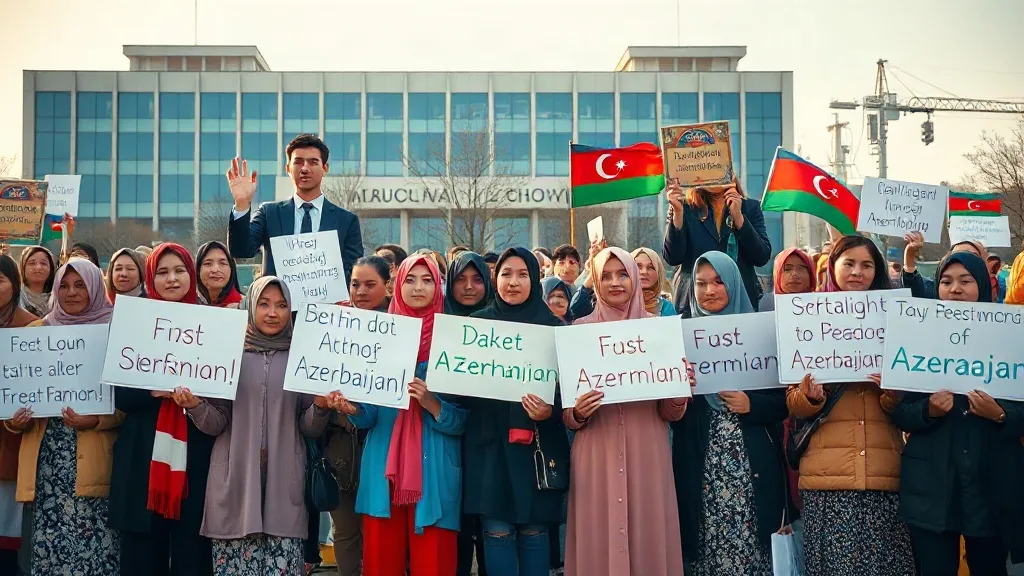
In recent weeks, Azerbaijan has found itself at the center of a heated debate over the place of religious expression in public schools. A new policy restricting the wearing of the hijab in educational institutions has ignited protests among students and teachers, drawing attention to the delicate balance between the country's secular constitution and the religious freedoms of its Muslim-majority population.
The controversy erupted after authorities introduced changes to school uniform regulations that effectively ban headscarves for female students. While the government frames the move as a step to uphold secular education and ensure equality, many citizens view it as an infringement on their right to manifest their faith. The protests, though largely peaceful, have underscored deep-seated tensions in a nation that prides itself on its secular governance but is also home to a predominantly Muslim society.
Background: A Secular State in a Muslim Society
Azerbaijan, a former Soviet republic, has long defined itself as a secular state. Its constitution guarantees freedom of religion, and the education system is designed to be free from religious influence. This secular identity is a source of national pride, distinguishing Azerbaijan from some of its neighbors. However, the majority of its population identifies as Muslim, and for many, the hijab is an integral part of their daily life and cultural identity.
The latest restrictions are not entirely new. For years, there have been informal pressures and occasional bans on religious symbols in schools, but the recent policy formalizes and expands these restrictions. According to officials, the aim is to create a uniform educational environment where all students are treated equally, regardless of their religious background. Yet critics argue that such policies disproportionately target Muslim students and fail to respect their constitutional right to religious expression.
The Spark: Protests and Reactions
The announcement of the new uniform rules quickly sparked protests in several regions, particularly in conservative areas where religious observance is more common. Videos circulating on social media showed students and teachers gathering to voice their opposition, some holding signs that read "My hijab is my right" and "Secularism does not mean atheism." The protests have been mostly peaceful, but the intensity of feeling is clear.
One teacher, who wished to remain anonymous, told local media that the ban feels like an attack on personal identity. "I have worn the hijab my entire life," she said. "It is not a political statement; it is who I am. Now I am being told I cannot do my job because of my faith." Her sentiment echoes across many families who are now faced with a difficult choice: comply with the policy or withdraw their children from public schools.
The government, for its part, has defended the policy as necessary to maintain the secular character of education. In a statement, the Ministry of Education emphasized that schools should be places where students focus on learning, free from religious symbols that could cause division. "Our goal is to ensure that every child feels equal and included," a spokesperson said. "This is not about restricting religion; it is about upholding the principles of our secular state."
Secularism vs. Religious Freedom: A Delicate Balance
The debate in Azerbaijan reflects a broader global conversation about the role of religion in public life. Secularism, in its truest form, is meant to protect both believers and non-believers by keeping the state neutral. However, when policies are perceived as targeting a specific religious group, they can backfire, leading to alienation and resistance rather than integration.
International human rights organizations have weighed in, urging the Azerbaijani government to reconsider the ban. They argue that wearing the hijab is a fundamental right protected under international covenants on religious freedom. "A blanket ban on religious symbols in schools is a violation of the right to freedom of religion or belief," said a representative from a prominent rights group. "States must ensure that their policies do not discriminate against any particular religion."
On the other hand, supporters of the ban argue that secular education is essential for social cohesion. They point out that allowing religious symbols in schools could lead to pressure on students to conform to certain religious norms, potentially undermining the freedom of those who choose not to observe. "We need to protect the rights of all students, including those who do not wish to wear religious attire," said a parent in Baku. "A uniform policy ensures that no one is singled out or forced to comply with a particular interpretation of Islam."
The Wider Implications
The outcome of this controversy could have far-reaching consequences for Azerbaijan. The country has long positioned itself as a model of tolerance and secularism in the Muslim world, but the protests suggest that many citizens feel their religious identity is being sidelined. If the government remains steadfast, it risks deepening the divide between the state and a significant portion of its population. Alternatively, a compromise could be reached by allowing individual exemptions or by engaging in dialogue with religious leaders and community representatives.
Education is a sensitive arena because it shapes the next generation. How Azerbaijan handles this issue will signal to the world whether it can successfully reconcile its secular ideals with the religious values of its people. The protests are a reminder that policies imposed from the top down often fail to account for the lived realities of those they affect. A more inclusive approach, one that respects both secular principles and religious freedoms, may be the only way forward.
Frequently Asked Questions
What exactly does the new policy say about hijabs in schools?
The policy updates school uniform regulations to prohibit the wearing of religious symbols, including the hijab, in public schools. It applies to both students and staff, with the stated goal of maintaining a secular educational environment.
Why is the hijab ban so controversial in Azerbaijan?
Azerbaijan is a Muslim-majority country with a secular constitution. Many citizens see the hijab as an expression of their faith and cultural identity, so restricting it is viewed as an infringement on religious freedom. The ban has sparked protests and a national debate on the balance between secularism and individual rights.
Have there been similar bans in other countries?
Yes, several countries have implemented restrictions on religious symbols in schools, including France, Turkey, and parts of Germany. Each case has sparked debates over secularism, integration, and religious freedom, with varying outcomes.
What are the potential consequences of the ban?
The ban could lead to increased social tension, push religious families to withdraw their children from public schools, and damage the government's reputation both domestically and internationally. It may also prompt legal challenges on the grounds of religious discrimination.
How can the government address the concerns of protesters?
The government could consider dialogue with community leaders, offer exemptions for those who feel their religious rights are violated, or revise the policy to allow religious symbols as long as they do not disrupt the educational process. A balanced approach that respects both secular principles and religious freedoms would be more sustainable.