
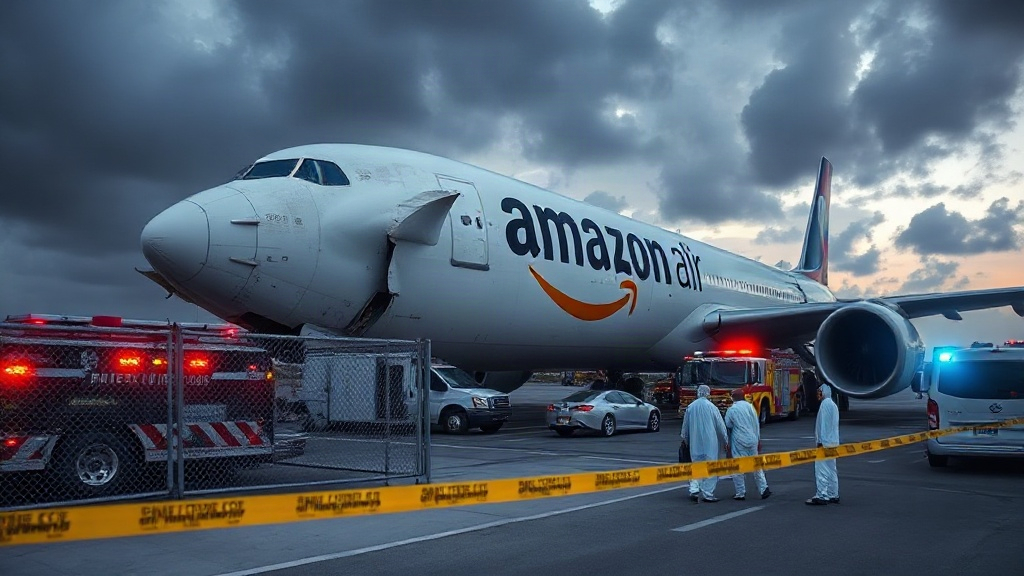
Sunday afternoon at Miami International Airport was shaping up to be just another busy travel day, until a routine cargo arrival turned into a scene of twisted metal and emergency lights. A Boeing 767 freighter flying for Amazon's Prime Air network touched down, kept rolling past the end of the runway, and plowed into a line of vehicles near a parking area. By the time first responders reached the wreckage, at least five people were dead and several more were being rushed to hospitals. The airport, one of the busiest in the country, went into a ground stop that left thousands of passengers stranded and flight boards flashing red for hours.
This is not the kind of story anyone wanted to cover on a weekend evening. But as the smoke cleared and the sirens faded, the questions started piling up faster than the luggage at the baggage claim. What went wrong? Why did a cargo jet, with no passengers on board, end up taking lives on the ground? And what does this mean for Amazon's sprawling air logistics network, which has become a quiet but critical backbone of the company's two-day delivery promise?
A Freight Flight Turns Fatal
The aircraft involved was a Boeing 767-300 converted freighter, operated by an Amazon-contracted cargo airline. These planes are workhorses of the e-commerce era, flying overnight between Amazon's regional hubs and major sorting centers. On Sunday, the jet was arriving at Miami International, a key gateway for both passenger travel and cargo traffic. According to early reports, the landing itself appeared normal at first. But something changed in the final moments. The plane did not decelerate as expected. It overran the runway, crossed into a perimeter area, and struck multiple vehicles before coming to rest near a parking lot.
The National Transportation Safety Board (NTSB) has already dispatched a team of investigators to the scene. They will be looking at everything from the aircraft's braking systems and tire condition to weather data, pilot communications, and the runway's surface condition. Miami in late fall can bring sudden rain showers, and wet runways reduce friction. But investigators will not jump to conclusions. They will pull the cockpit voice recorder and flight data recorder, hoping those black boxes tell the story of what happened in the final seconds.
What we know for now is heartbreakingly simple: people on the ground, likely airport workers or drivers near the perimeter, lost their lives. Their names have not been released. Their families are now living through the worst kind of phone call. And the aviation community is once again reminded that safety is never a given, even on a routine cargo hop.
Why This Crash Hits Different
Passenger airline crashes dominate headlines because of the sheer number of souls on board. But cargo accidents carry their own weight. Amazon's air network has grown at a staggering pace over the past decade. The company leases dozens of aircraft, contracts with multiple cargo airlines, and operates a growing number of regional air hubs. Flights like the one that crashed on Sunday are part of a relentless schedule designed to move packages from warehouse to doorstep in under 48 hours.
That speed comes with pressure. Pilots flying for cargo carriers often work overnight shifts, deal with tight turnaround times, and face the same weather and mechanical challenges as passenger crews, but with less public scrutiny. The Miami crash will likely renew conversations about fatigue, maintenance oversight, and the rapid expansion of e-commerce aviation. Investigators will look at the pilot's recent duty schedule, the airline's maintenance records, and whether the aircraft had any known issues before departure.
For Amazon, the crash is a reputational blow even though the company does not directly operate the aircraft. The Prime Air branding is on the plane, and the company's promise of fast delivery is now tangled up in a tragedy. Amazon has not commented beyond a brief statement expressing condolences and pledging cooperation with investigators. But behind the scenes, logistics managers are already rerouting packages, adjusting schedules, and bracing for a wave of questions from regulators and the public.
Inside the Investigation: What the NTSB Will Examine
When the NTSB arrives at an accident scene, they do not look for a single smoking gun. They build a timeline, piece by piece. In Miami, that timeline will start hours before the crash. Investigators will review the aircraft's maintenance log, looking for any recent repairs or deferred items related to brakes, tires, or hydraulics. They will interview the flight crew, ground personnel, and air traffic controllers. They will analyze weather radar and runway condition reports. They will examine the tire marks on the runway to determine whether the plane touched down long, fast, or both.
One key area of focus will be the runway itself. Miami International has multiple runways, but the one used by the cargo jet may have been shorter than ideal for a fully loaded 767. If the plane landed with a tailwind, or if the runway was wet from an earlier storm, stopping distance could have been compromised. The NTSB will also look at whether the aircraft's thrust reversers deployed correctly and whether the spoilers, which help kill lift and put weight on the wheels, functioned as designed.
Human factors are equally important. The pilot's recent sleep patterns, meal breaks, and overall workload will be scrutinized. Cargo pilots often fly at night, when the body's natural rhythms are fighting against alertness. A missed checklist item or a delayed reaction in the final seconds can have catastrophic consequences. The NTSB will not assign blame; they will assign cause. And that cause may take a year or more to determine.
The Ripple Effect on Flights and Passengers
In the immediate aftermath of the crash, Miami International Airport went into a full ground stop. No planes took off or landed for several hours, creating a cascading delay across the country. Miami is a major hub for American Airlines and a key gateway to Latin America and the Caribbean. When one of its runways shuts down, the impact is felt from New York to São Paulo. Passengers reported sitting on tarmacs for hours, watching their connections disappear. Airlines scrambled to rebook travelers, but with holiday travel season looming, seats were scarce.
By Monday morning, the airport had partially reopened, but one runway remained closed for the investigation. Delays and cancellations continued to ripple through the system. For travelers, the advice is simple: check your flight status before heading to the airport, and be prepared for longer waits. The crash also forced airlines to reroute some cargo shipments, which could delay package deliveries for Amazon customers in the region. The company has not said how many packages were affected, but the plane was reportedly carrying a full load of freight.
Beyond the immediate disruption, the crash will likely lead to new safety discussions at the Federal Aviation Administration. Cargo airlines have historically operated under slightly different rules than passenger carriers, particularly around crew rest and duty limits. This accident may prompt regulators to take a harder look at those differences. For now, though, the focus is on the victims and their families, and on letting investigators do their work without speculation.
What Comes Next for Amazon Air
Amazon's air network is not going away. The company has invested billions in aircraft, hubs, and technology to control more of its delivery chain. But this crash will force a reckoning. Amazon contracts with several cargo airlines, including Atlas Air, ABX Air, and Air Transport International. Each of those carriers will now face heightened scrutiny from the FAA and from Amazon itself. The company may demand more rigorous maintenance checks, stricter pilot scheduling rules, or additional safety audits. In the short term, Amazon may also slow down its expansion plans to focus on safety culture.
For the families of the five people who died, none of that matters right now. They are grieving. They want answers. And they want to know that their loved ones did not die in vain. The NTSB's investigation will eventually provide a factual account of what happened, but it will not bring anyone back. The best outcome from a tragedy like this is that the lessons learned make future flights safer for everyone, whether they are sitting in a passenger cabin or driving a baggage cart near the runway.
As the sun set over Miami on Sunday, the wreckage of the 767 sat silent behind yellow tape. Investigators in white suits moved carefully around the debris, photographing everything, measuring distances, and preserving evidence. In the terminal, stranded passengers stared at their phones, waiting for updates. And somewhere in the city, five families began a grief they never expected. The story of this crash is still being written, but its first chapter is already a tragedy.
Frequently Asked Questions
What caused the Amazon cargo plane to crash in Miami?
The exact cause is still under investigation by the NTSB. Early reports suggest the aircraft overran the runway after landing, but investigators have not determined why. They will examine braking performance, weather conditions, pilot actions, and maintenance records. It could take months or even a year before a probable cause is released.
Were there any passengers on the Amazon cargo plane?
No, the flight was a cargo-only operation with no passengers on board. The fatalities and injuries occurred on the ground, where the aircraft struck multiple vehicles near a parking area after overrunning the runway.
How many people died in the Miami airport cargo plane crash?
At least five people were killed, according to officials. Several others were injured and taken to local hospitals. The victims were on the ground, not on the aircraft. Their identities have not been released pending notification of families.
Is Miami International Airport still closed after the crash?
The airport has partially reopened, but one runway remains closed while investigators work. Passengers should expect ongoing delays and cancellations. Check with your airline before traveling to the airport, and allow extra time for security and rebooking.
Will this crash affect Amazon package deliveries?
Amazon has not specified how many packages were on the aircraft or how many deliveries may be delayed. However, the crash and subsequent ground stop likely disrupted the company's regional logistics network. Customers in South Florida and nearby areas may see minor delays in the coming days.