
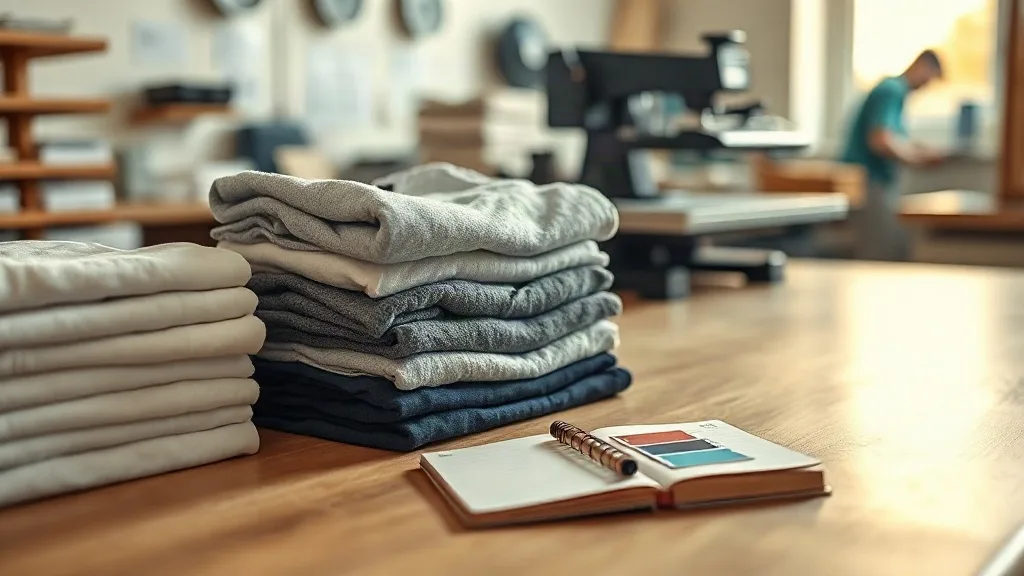
Most print shop owners spend their energy on the press, the transfers, the inks, and the marketing. The blank shirt gets whatever is left over. That is backwards. The blank is the product your customer actually touches, wears, and washes. It is also the line item where a few cents of difference can quietly decide whether a job makes money or just keeps the lights on. If you have been treating smart blanks as an afterthought, this is the moment to flip that habit.
I learned this the slow way. A few seasons back, I quoted a 300-piece order using a cheap tee I had never run before. The price was unbeatable on paper. Two weeks after delivery, the customer sent back 40 shirts with twisted side seams and a print that had cracked along the shoulder. The reprint ate the entire margin and then some. The replacement blanks I ordered, a heavier combed cotton style, cost about a dollar more per unit. That dollar would have saved me a two-thousand-dollar lesson.
What Makes a Blank Smart, Not Just Cheap
A blank is smart when it behaves predictably across the whole job: when you print it, when the customer wears it, and when it comes out of the wash. That means consistent fabric weight, low shrinkage, a smooth print surface, and a cut that holds its shape. None of those things show up on a price sheet, but all of them show up on your P&L.
Here is what I check before I commit to a blank for a repeat client:
- Fabric weight and hand feel. A 4.3 oz jersey and a 6 oz ring-spun cotton feel like different products to the customer, even if they look identical on a hanger. Heavier blanks hold a DTF transfer with less texture show-through, which matters on detailed designs.
- Shrinkage after wash. Ask for the test data or run your own wash test. A blank that shrinks 7 percent will come back to you as a sizing complaint. A blank that shrinks under 3 percent keeps the fit the customer paid for.
- Seam construction. Double-needle hems and taped neck and shoulder seams cost more upfront and save you on returns. Side-seamed bodies resist the twisting that plagues tubular blanks after a few washes.
- Color consistency across dye lots. If you run a 500-piece order in three drops, the navy has to match. Ask your supplier how they handle lot matching before you promise a uniform look.
- Print surface. Combed and ring-spun cotton give a smoother face for shaka wear and similar premium blanks, which means cleaner detail on fine lines and small text.
The Math That Makes or Breaks a Job
Let us run a simple example. You quote a 100-piece order at 18 dollars per shirt. Your current blank costs 3.50 dollars. You switch to a better blank at 4.75 dollars. Your per-unit profit drops by 1.25 dollars, which feels like a loss until you count the hidden costs of the cheap blank: a 5 percent reprint rate at 18 dollars per unit, plus the labor to handle returns, plus the customer who does not come back.
The cheap blank costs 3.50 plus roughly 0.90 in reprint exposure plus the value of a lost repeat client. The better blank costs 4.75 and carries almost none of that. On paper the cheap blank wins. In the real world, the better blank is the one that lets you sleep at night and keeps the customer on your books for the next three seasons.
This is why I stopped shopping for blanks by unit price alone. I shop by cost per wear and cost per repeat. A blank that survives 40 washes without pilling or fading is a marketing asset. A blank that looks tired after five washes is a refund waiting to happen.
Where Smart Blanks Fit in Your Product Line
Not every job needs the same blank. A smart shop builds a small ladder of options and matches each rung to a customer type.
The Entry Tier
For giveaway tees, event shirts, and high-volume promotional work, you want a blank that is inexpensive, consistent, and good enough to wear once a week. The priority here is predictable sizing and a print surface that will not fight a DTF transfer. Do not overbuild this tier. Do not underbuild it either. A blank that fails on a giveaway shirt still carries your shop's name on someone's back.
The Core Tier
This is where most of your revenue lives: team uniforms, small business merch, school spirit wear, and the everyday retail tee. Customers here care about fit, feel, and how the shirt looks after a month. A ring-spun cotton blank in the 5 to 6 ounce range with side seams and low shrinkage is the workhorse of this tier. It prints well, wears well, and gives you room to charge a fair price without apology.
The Premium Tier
For brand launches, boutique clients, and anyone selling at retail, the blank has to feel like a product, not a promotional item. This is where heavier fabrics, garment-dyed finishes, and premium constructions earn their keep. Customers in this tier are not comparing your price to the shop down the street. They are comparing your shirt to the one they bought at a boutique for 45 dollars. Your blank needs to hold that comparison.
How to Test a New Blank Without Wasting a Week
You do not need a lab to evaluate a blank. You need a washing machine, a press, and a notebook. Here is the routine I run whenever I consider a new style:
- Order three pieces in white and three in a dark color. White shows print defects, dark shows dye bleed and fading.
- Print one of each color with a test design that includes fine lines, small text, and a large solid block.
- Wash one set three times on a normal cycle with a standard detergent. Wash another set ten times. Keep the third set unwashed as a control.
- Compare shrinkage, print adhesion, color shift, and hand feel against the control.
- Note the results in a shared file so your whole team orders from the same tested list.
This takes about ten days and costs less than a single reprint. It also gives you something more valuable than data: confidence. When a customer asks whether the shirt will hold up, you can answer with a specific number instead of a shrug.
The Supplier Side: What to Ask Before You Commit
A good blank is only half the equation. The other half is the supplier behind it. Before you make a blank your house standard, ask these questions:
- What is the average shrinkage rate, and is it tested per dye lot or per style?
- How do you handle lot matching on split shipments?
- What is your fill rate on the sizes and colors I use most?
- Can you hold inventory for a repeat client, and at what volume?
- What is your policy on defective units, and how fast do you replace them?
The answers tell you more about a supplier than any catalog. A supplier who can speak in specifics about shrinkage and fill rate is a supplier who has actually run production. A supplier who answers in generalities is a supplier who will leave you holding the reprint.
This is also where curated collections earn their place. Working with a source that already filters for consistent construction, like the smart blanks range, saves you the trial-and-error phase. You still run your own wash test, but you start from a shorter list.
Common Mistakes That Quietly Cost You Money
Even experienced shops fall into a few traps. The first is ordering by price per unit and ignoring the cost of returns. The second is switching blanks between drops of the same order, which almost always produces a visible color or fit difference. The third is underestimating the print surface: a blank with a rough face will show texture through a DTF transfer, and no amount of press tuning fixes that.
The fourth mistake is treating the blank as a purchasing decision instead of a product decision. The blank is not something you buy. It is something your customer wears. Once you frame it that way, the questions change. You stop asking what is cheapest and start asking what will still look good in six months.
Frequently Asked Questions
How do smart blanks differ from standard wholesale tees?
They are selected for consistency rather than just price. That usually means tighter shrinkage tolerances, side-seamed construction, smoother print surfaces, and better lot matching. The difference is not one feature but a set of small reliability gains that compound across a large order.
Is it worth paying more per blank if my customers are price-sensitive?
Often yes, because the extra cost is small compared to the cost of a reprint or a lost repeat client. Run the math on your own reprint rate. If even 3 percent of your orders come back, the savings from a cheaper blank usually disappear.
How many washes should a good blank survive before it looks worn?
A reasonable target for a core-tier blank is 30 to 40 normal wash cycles with minimal pilling, fading, or seam distortion. Premium tiers should push past that. Run your own wash test rather than relying on a spec sheet.
Can I use the same blank for DTF and screen printing?
Usually yes, but check the print surface. A blank that works well for screen printing may still show texture through a DTF transfer if the face is rough. Test both methods on the same style before you commit to a house standard.
What is the fastest way to build a tested blank list?
Start with two or three styles you already trust, run the ten-day wash test on each, and document the results. Add one new style per quarter, and retire any style that fails twice. In a year you will have a short list that covers every tier of your product line.