
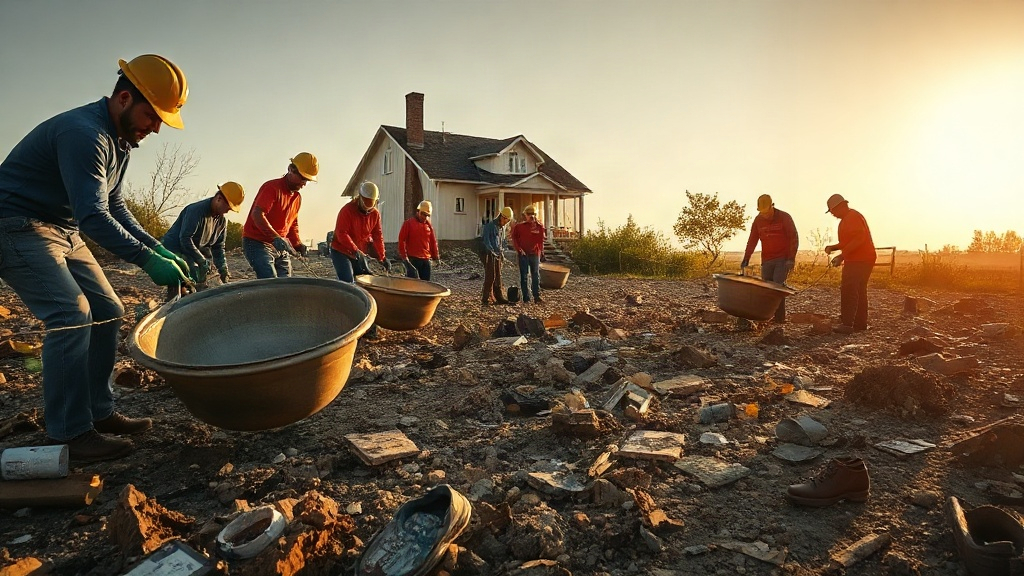
When a hurricane or wildfire tears through a community, the immediate focus is on survival: rescuing people, restoring power, clearing roads. But long after the news cameras leave, another kind of recovery begins. It is slower, quieter, and often invisible. Across the country, teams of archaeologists, forensic specialists, and volunteers are carefully combing through tons of debris to find objects that hold no monetary value but carry immense emotional weight: a child's handprint in clay, a wedding ring, a faded photograph, a military medal.
This work can take years. In some cases, it is impossible to pick up all the pieces. Yet the effort continues because for survivors, these objects are not just things. They are fragments of identity, memory, and love.
The Science of Sifting Through Ruins
Recovering sentimental items from a disaster site is not simply a matter of rummaging. It requires methodical techniques borrowed from archaeology and forensic science. Teams often start by mapping the debris field, using GPS coordinates and aerial imagery to divide the area into grids. Each grid is then searched layer by layer, with every find documented and bagged.
"We treat it like an excavation," says Dr. Elena Marsh, a forensic archaeologist who has led recovery efforts after several major hurricanes. "You don't just dig randomly. You remove debris in controlled passes, and you record where each object was found. That context helps us understand what we're looking at and how to preserve it."
Soil sifting is common. Volunteers use screens with various mesh sizes to catch small items like coins, buttons, or teeth. Metal detectors help locate buried jewelry. In fire zones, the challenge is different: intense heat can fuse objects together or reduce them to ash. Here, recovery specialists rely on knowledge of how different materials behave under extreme temperatures. Gold melts at around 1,948 degrees Fahrenheit, so gold jewelry often survives as a misshapen lump, while silver may oxidize or melt away entirely.
Water damage presents its own set of problems. Paper photographs, letters, and books can turn to pulp within days. If they are found quickly, freeze-drying can save them. But if they have been submerged for weeks, mold and disintegration may make recovery impossible. Teams prioritize items that are still salvageable, knowing that every hour counts.
From Wreckage to Reunion: The Long Road Home
Once an object is recovered, it enters a chain of care. It is cleaned, stabilized, and photographed. Detailed descriptions are entered into databases that survivors and their families can search. Some items are returned directly if they have identifying marks. Others are displayed at community centers or posted online, hoping someone will recognize them.
The process is painstaking. A single storm can scatter debris across miles. In the aftermath of a tornado, a photo album might end up in a field ten miles away, while a wedding band could be buried under feet of mud. Recovery teams often work with local law enforcement and disaster agencies to cross-reference found items with missing property reports.
But not everything can be saved. "There are times when we have to tell a family that we found something, but it's too damaged to recover," says Marsh. "That's the hardest part. You want to give them closure, but sometimes the best you can do is confirm that the item is gone."
For survivors, even a fragment can be meaningful. A melted piece of a child's toy, a charred corner of a family Bible, a single earring. These objects become touchstones, proof that a life existed before the storm.
The Emotional Toll on Recovery Workers
The people who do this work are not immune to its emotional weight. They spend months, sometimes years, surrounded by the remnants of shattered lives. They handle items that were once treasured, now reduced to debris. They meet families who are still grieving, still hoping.
"You can't help but imagine the stories behind each object," says Tom Reyes, a volunteer who has worked on recovery efforts in California after wildfires. "I found a child's backpack once. It had a name tag inside. I thought about that kid every day until we finally located the family. They had lost everything, but that backpack meant the world to them."
To cope, many teams build in time for debriefing and peer support. Some organizations provide counseling. Others rotate workers out of the field regularly to prevent burnout. The work is rewarding, but it requires a certain emotional resilience.
Why This Work Matters
In the grand scheme of disaster recovery, sentimental items may seem like a luxury. After all, people need housing, food, and medical care. But psychologists and disaster researchers have found that recovering personal keepsakes can play a crucial role in emotional healing. These objects help survivors reconstruct their sense of self and connect with lost loved ones.
"When everything else is gone, a single photograph or a piece of jewelry can anchor you," says Dr. Lisa Ortega, a trauma psychologist who has studied disaster survivors. "It's not about materialism. It's about identity. These items say, 'I was here. My family was here. We mattered.'"
That is why clean-up crews meticulously separate the sentimental from the wreckage. They know that for many survivors, the difference between a pile of trash and a treasure is not monetary value but memory.
How Communities Can Help
While professional teams lead the effort, communities play a vital role. If you live in an area affected by disaster, here are some ways to support recovery:
- Report found items: If you come across personal objects in debris, turn them in to local recovery centers. Do not keep them, even if they seem insignificant.
- Volunteer carefully: Only join organized search efforts. Uncoordinated digging can destroy context and make recovery harder.
- Donate supplies: Recovery teams need items like archival boxes, acid-free tissue, plastic bags, and labeling materials.
- Support long-term funding: Recovery work often continues for years after a disaster. Donate to organizations that specialize in this work.
Above all, be patient. The process is slow, and not every item will be found. But every effort brings a measure of comfort to someone who has lost so much.
Frequently Asked Questions
How long does it take to recover sentimental items after a disaster?
It varies widely. Some items are found within days, while others may take years. The timeline depends on the scale of the disaster, the resources available, and the condition of the debris. In some cases, recovery efforts continue for a decade or more.
What kinds of objects are most commonly recovered?
Jewelry, photographs, tools, and small personal items like wallets or keys are among the most frequently found. Items made of metal or stone tend to survive better than paper or fabric. However, even fragile items can be preserved if they are found quickly and treated properly.
Can I search for my own lost items?
It is best to coordinate with official recovery teams. They have the training and equipment to search safely and systematically. If you want to help, volunteer with a recognized organization. Searching on your own can be dangerous and may interfere with ongoing efforts.
What should I do if I find a personal item in debris?
Do not clean it or attempt to repair it. Place it in a bag or container, note where you found it, and turn it in to the nearest recovery center. Trained specialists will handle preservation and try to identify the owner.
How can I support recovery workers emotionally?
Acknowledge their work. A simple thank-you goes a long way. If you know someone involved in recovery, check in on them. Encourage them to take breaks and seek support if needed. The emotional toll of this work is real, and community appreciation helps sustain them.